
Real Aviation Maintenance Apprentice Opportunities✈️
✈️ Airframe and Powerplant (A&P) Mechanic Apprentice | 16 - 24/hour | On-the-Job Training | Scarce Positions
🛠️ Earn While You Certify | 💼 Direct Airline Hiring | 📍 Designated Base Roles | ⚠️ Highly Competitive Entry
For individuals aspiring to enter the aviation maintenance industry, paid apprentice programs offered by select major airlines represent a highly valuable pathway. Leading cargo and passenger aviation carriers occasionally open Registered Apprentice positions, allowing trainees to earn their FAA licenses through on-the-job experience (OJT) while employed full-time.
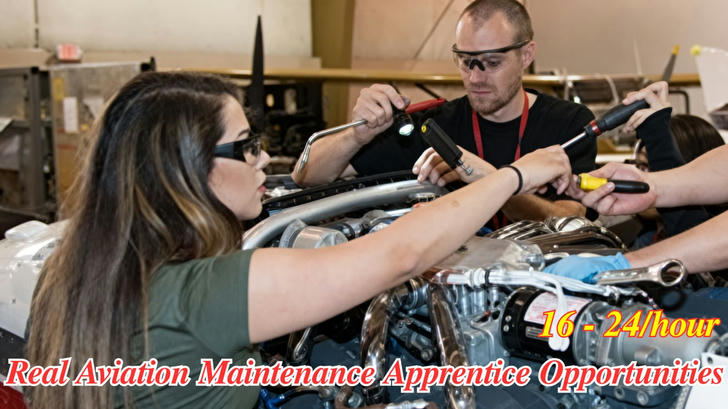
⚠️ Important Note: These paid apprentice positions are extremely scarce. They are direct employment opportunities provided by airlines, not universal "government-funded programs." The majority of aspiring mechanics still pursue certification through self-funded community college programs. The following information is based on real industry benchmark job cases.
Why Are These Airline Apprentice Programs So Sought After?
By partnering with organizations that meet U.S. Department of Labor Apprenticeship Standards and FAA 14 CFR Part 65.77 requirements, apprentices gain experience in a real-world working environment.
Key Advantages (Based on Real Industry Cases):
- Earn While Employed: As company employees, apprentices earn an hourly wage of 16 to 24 during training. This provides an income source while acquiring skills。
- Hands-On Experience: Trainees assist licensed technicians directly in hangars, working on real aircraft maintenance tasks instead of only simulating them in a classroom.
- Authoritative Certification Path: Upon completing a structured training program of approximately two years, apprentices become eligible to take the FAA A&P license exams.
- Career Launchpad: High-performing individuals often transition directly into full-time mechanic roles upon graduation, securing a stable career.
Industry Benchmark Case: Typical Aviation Apprentice Program Details
The following content is strictly organized based on real recruitment documentation standards from major U.S. airlines:
1. Position Overview
- Job Title: Airframe and Powerplant Mechanic Apprentice
- Employer Type: Major Private Airline — Corporate hiring, not direct government recruitment
- Program Duration: 2 Years (Structured On-the-Job Training)
- Location: Specific Aviation Hub Bases (Typically located near major airports or corporate headquarters); on-site presence is required. Positions are not available everywhere.
- Openings: Very few (Often only dozens per recruitment cycle, facing global competition).
2. Compensation and Benefits
- Hourly Rate: 16.00 - 24.00 (Increases with skill progression).
- Benefits: Eligibility for full employee benefits (Specifics vary by company policy, typically including insurance, etc.).
- Nature of Role: This is full-time employment, not just "training." The trainee status is that of a company employee.
3. Core Responsibilities
Apprentices perform the following tasks under the supervision of licensed technicians:
- Assist with Inspection and Maintenance: Help conduct regular inspections, scheduled maintenance tasks, and perform testing after repairs.
- Documentation: Accurately record work experience, on-the-job training progress, and maintenance logs (critical evidence for license certification).
- Technical Manual Interpretation: Learn to interpret complex maintenance instructions such as AMM (Aircraft Maintenance Manual), SRM (Structural Repair Manual), WDM (Wiring Diagram Manual), etc.
- Troubleshooting: Assist technicians in diagnosing and repairing faults, ensuring all work complies with approved maintenance data.
- Safety and Compliance: Strictly adhere to airline safety rules, FAA policies, and Department of Labor apprenticeship standards; maintain a clean work area.
4. Requirements and Realistic Barriers
These programs are not "zero-barrier" and typically require:
- Core Qualities: Strong sense of responsibility, safety awareness, learning ability, and teamwork spirit.
- Background Check: Must pass rigorous airline background checks and security clearances.
- Educational Background: Preference is often given to candidates with a high school diploma or equivalent, or those with a mechanical foundation (despite the "apprentice" title, competition is fierce).
- Commitment: Must be able to commit to a two-year full-time training program.
💡 Industry Reality: Apprenticeship vs. Schooling
When pursuing an aviation maintenance career, it is crucial to distinguish between the two main pathways:
| Feature | Airline Paid Apprenticeship (Scarce Opportunity) | Community College/Trade School (Mainstream Path) |
|---|---|---|
| Cost Model | Employed & Paid, earning wages (16-24/hr) | Self-Funded (Expensive tuition) |
| Difficulty to Enter | Extremely High, positions are scarce, hiring occurs infrequently | Lower, admission upon acceptance and payment |
| Training Method | On-the-Job Training (OJT), learning by doing | Classroom + Lab, systematic theory |
| Location | Fixed at designated airline bases | Flexible, available at community colleges nationwide |
| Duration | Typically 18-30 months (e.g., 2 years) | Typically 18-24 months |
Conclusion: Apprentice programs at major airlines are "lottery-level" opportunities. Securing one leads to an excellent career start; however, they cannot be viewed as the sole or universal entry point. Most professionals obtain their licenses by self-funding education at FAA-certified schools.
How to Find These Real Opportunities?
Do not trust advertisements claiming "government-guaranteed placement." Instead, monitor these official channels:
- Direct Airline Career Pages: Regularly check the "Careers" sections of major cargo and passenger airlines. Search for keywords like "Apprentice," "Mechanic Trainee," or "Registered Apprentice."
- U.S. Department of Labor Apprenticeship Database: Search for Registered Apprenticeship Programs in the aviation sector.
- FAA-Certified School List: If a paid apprenticeship is not found, enrolling in an FAA Part 147 certified school is a more reliable path. While self-funded, these programs offer high graduation rates and broad employability.
- Application Preparation: Resumes should highlight mechanical aptitude, safety awareness, and reliability.
Conclusion: Rational Planning and Grounded Effort
Paid apprentice programs at major airlines do exist, offering competitive wages of 16-24/hour and a two-year growth path. However, this is corporate hiring behavior, characterized by limited slots and fierce competition.
Recommendations:
- If such a recruitment opportunity arises, prepare for the interview with full effort.
- If no such opening is available, do not wait. Proactively choose a community college or technical school to invest in learning; this remains a reliable road to a high-paying aviation career.
- Be wary of any advertisements claiming "instant enrollment," "guaranteed high pay," or "direct government payments," as these often exaggerate scarce resources.
Launching an aviation dream requires accurate information and grounded effort, not unrealistic fantasies.